Will we have enough cash in the next 13 weeks?
Diane Whitaker, the founder, asks whether cash will hold up over the next quarter. The figures sit in four reports and the overheads' monthly rhythm, and are usually rebuilt in a spreadsheet.
You are
Ellen Brooks, Controller at Aurora Components.
The situation
Diane Whitaker, the founder, asks whether cash will hold up over the next quarter. The figures sit in four reports and the overheads' monthly rhythm, and are usually rebuilt in a spreadsheet.
Here you ask for an outlook from the books, with every line traced to a document or a recurring payment.
> Dynocortex explains your company's own figures and who decides. It does not give tax, legal, credit or investment advice; for those, ask a qualified adviser.
Step by step
Each step as it looks in the demo installation, on Aurora Components (Demo).
Open Dynocortex → Chats and ask
"How much cash do we have across all our accounts, and what will it look like week by week for the next 13 weeks?"
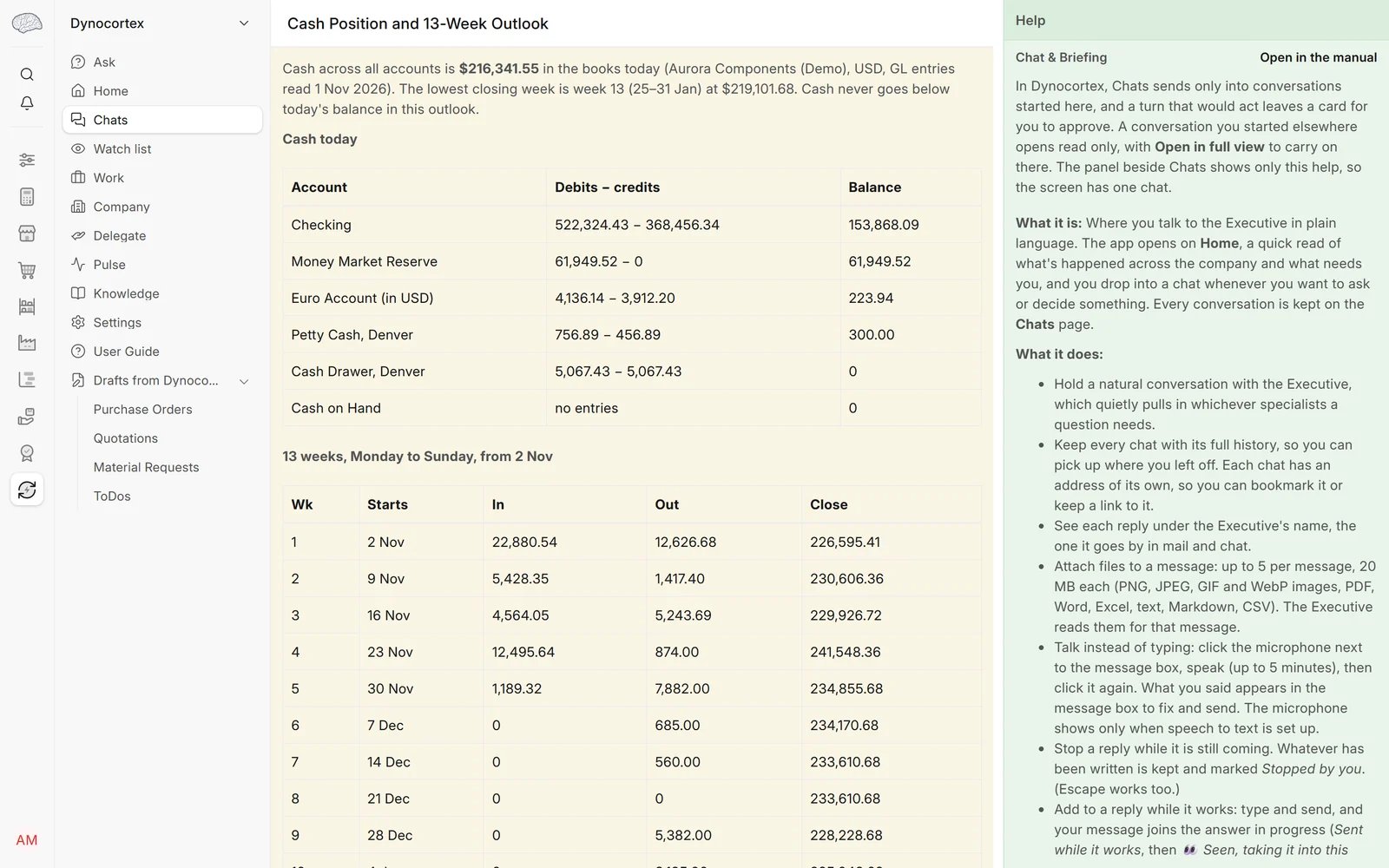
Ask
"What if Metro pays as late as it usually does?"
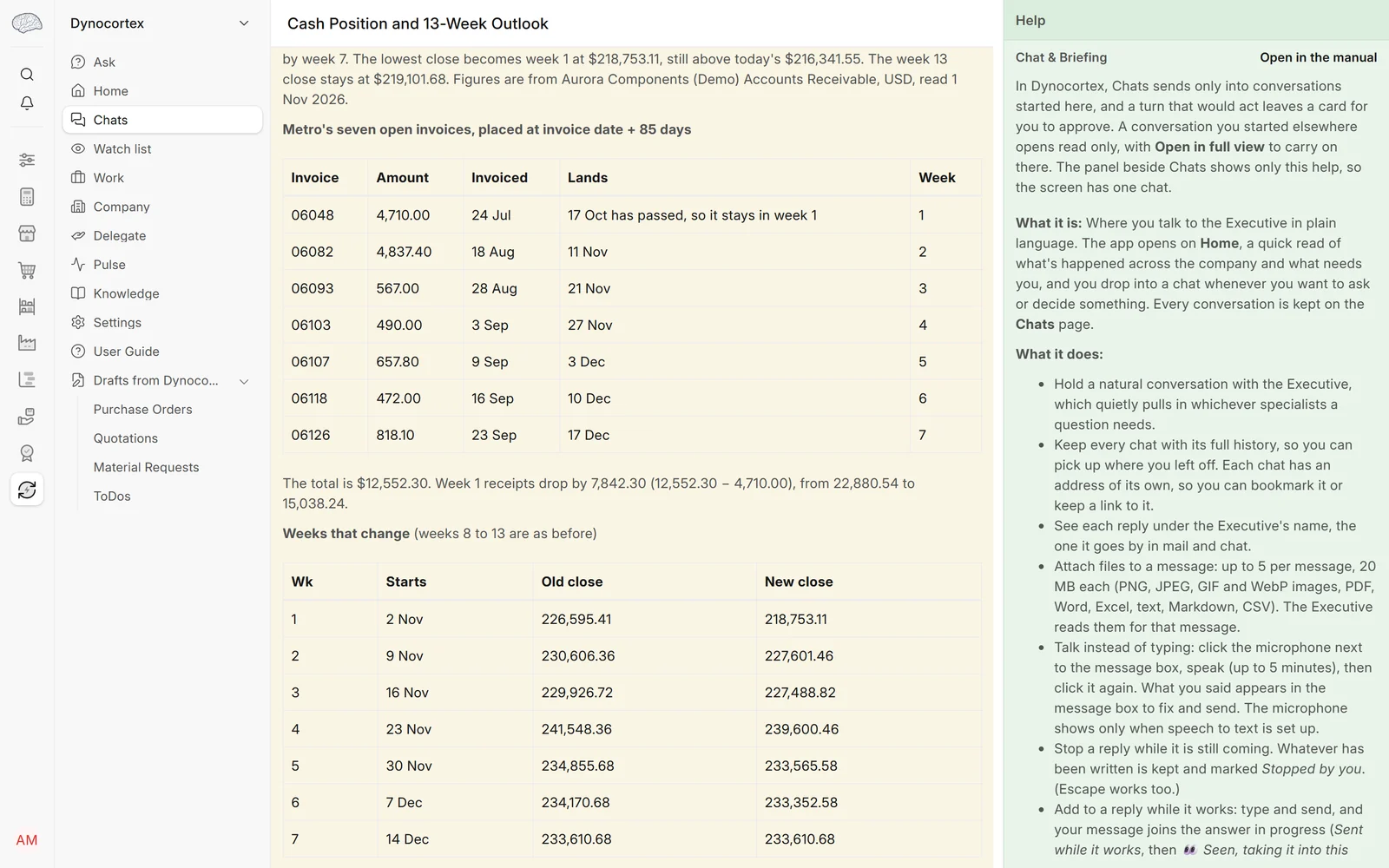
Ask
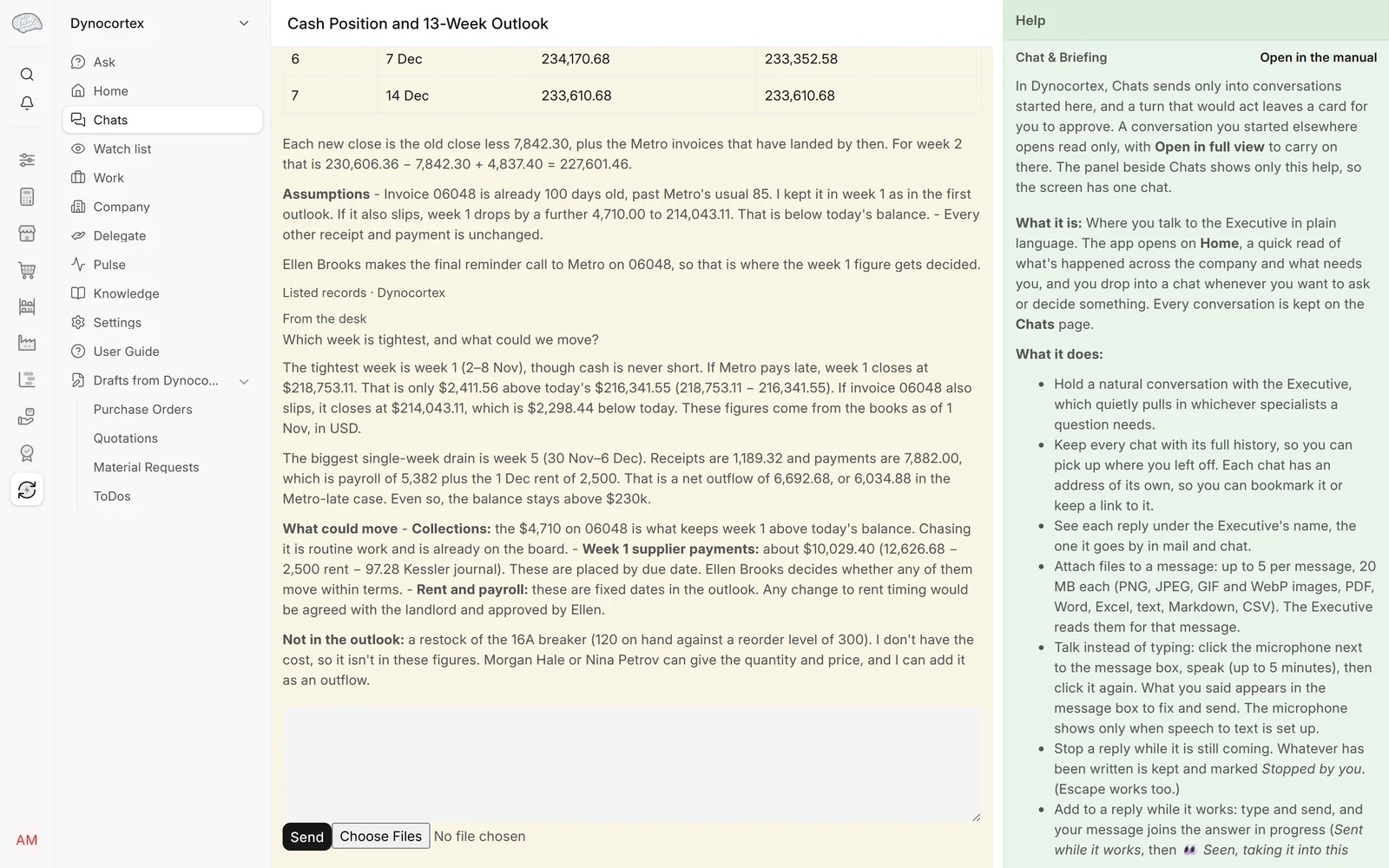
"Which week is tightest, and what could we move?"
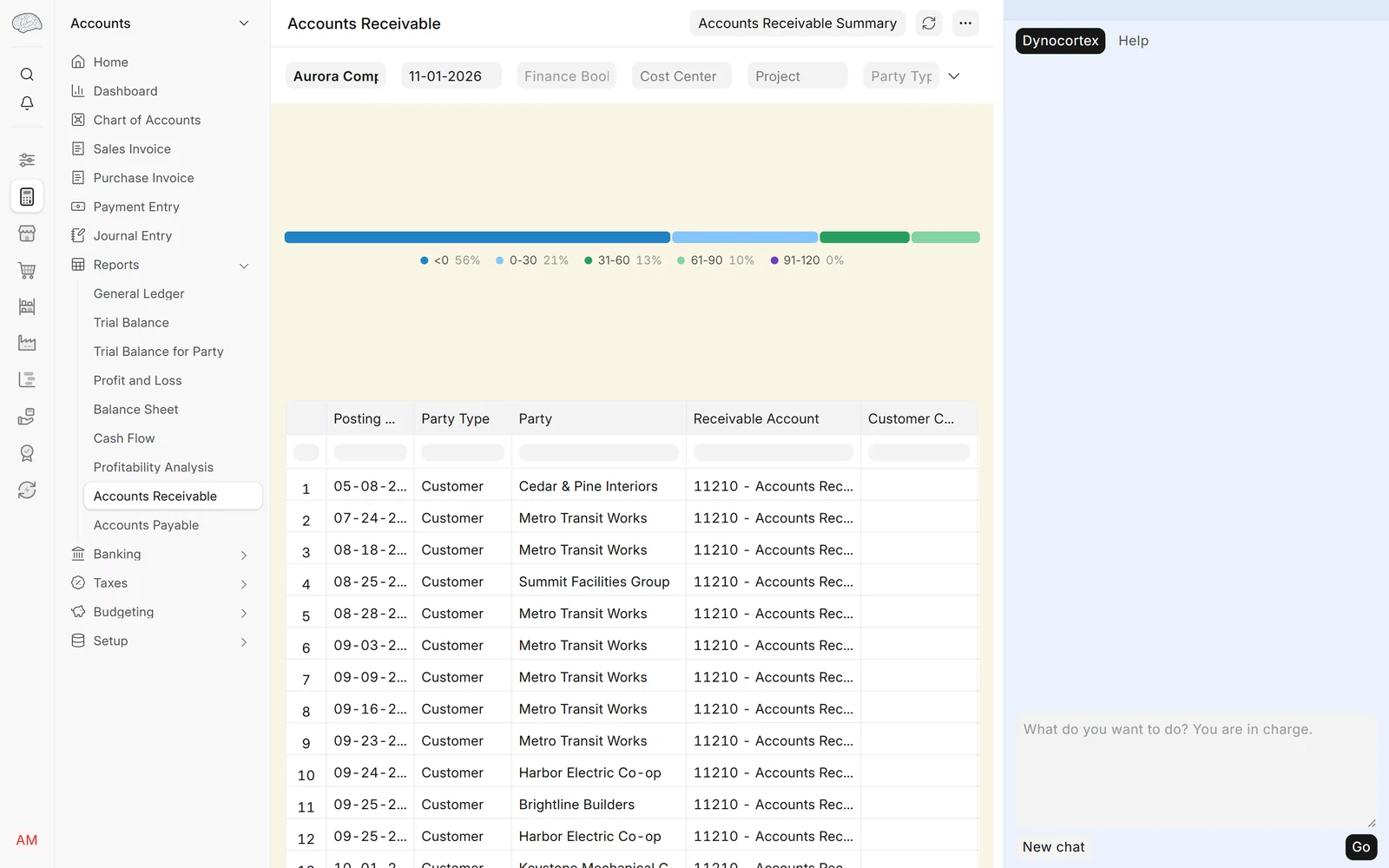
Open Accounting → Accounts Receivable and Accounts Payable from the answer, set Ageing Based On to Due Date, and compare them with the weeks in the answer.


What a good answer contains
- Today's cash: the book balance of the bank and cash accounts, from the Balance Sheet or General Ledger, in USD for Aurora Components. It says this is the book balance, not the bank's statement.
- An outlook from today's records, week by week for 13 weeks: customers' open invoices in the week they fall due, suppliers' invoices in theirs, and the overheads that recur (rent, payroll, utilities, the company card) at their last amount on their usual day. Each line names its document or its recurring payment.
- Its assumptions said out loud: that later weeks hold only what is in the books today, with no sales still to come.
- Metro Transit Works paying as it usually does, about two to three months after the invoice, and which of its open invoices that moves, and to when.
- The tightest week and its figure, with the arithmetic: each week's end is the week before, plus what comes in, less what goes out.
- What could move, as choices in the company's own figures: chasing a customer's payment, or paying a supplier later within its terms. Ellen decides on both; above everyone's limit, Diane Whitaker, the founder. A choice, not a verdict.
What the full product does beyond the demo
The Executive keeps the outlook up to date each week, flags a week that dips below a level the owner sets, and drafts the reminders that would bring a late customer's payment forward for the controller to approve.
Answers are worded afresh each time, so yours will read differently. The demo company is made up, and its data goes back to the start every night.